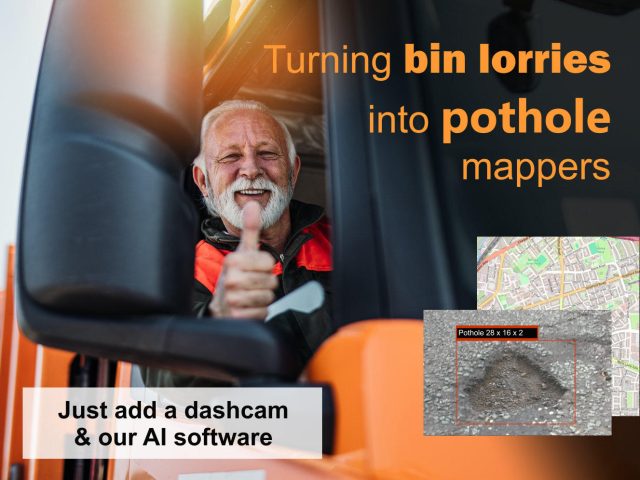
TERRAGRID is an AI-powered pothole detection system that analyses dashcam footage from existing fleet vehicles. It extracts information from buses, refuse lorries and other vehicles to automatically detect, assess and record road surface defects. No extra hardware needed.
Cost-effective road condition monitoring for Highways Departments
Our proven AI detection system analyses dashcam footage from existing council vehicles to detect potholes, assess their severity and log precise GPS co-ordinates.
- Fits existing systems: Feeds into current asset workflow models
- Uses existing fleet: No new vehicles, routes or fuel required
- Detects defects earlier: Identify potholes and emerging issues before they escalate
- Precise GPS logging: Capture location, size, depth and severity data for better prioritisation
- Clear audit trail: Create time-stamped records to evidence inspection and activity
Turn everyday journeys into network-wide inspection
Called TERRAGRID, the system operates passively in the background identifying defects earlier, improving maintenance planning and reducing reliance on reactive repairs. For example, a bus travelling its daily route becomes a consistent source of inspection data covering the same roads repeatedly, without any additional cost or operational impact.
Reliance on manual callouts, public reports or reactive site visits to identify potholes.
Potholes are automatically logged, measured & stored in a database of defect severity — no manual callouts required.
Traditional surveys may require dedicated inspection vehicles, staff, routes and fuel.
Uses existing fleets with no new vehicles, routes or fuel required.
Difficulty proving maintenance budgets have been used appropriately, weakening future funding cases.
A clear audit trail showing where maintenance activity was prioritised and why.
Minimise costs. Defend claims. Prove action.
Challenge vehicle damage compensation claims with time-stamped evidence of road condition and inspection activity.
Maximise funding opportunities and demonstrate responsible spending.
Optimised repair routes and fewer ”inspection only” vehicle journeys to save fuel and support sustainability.
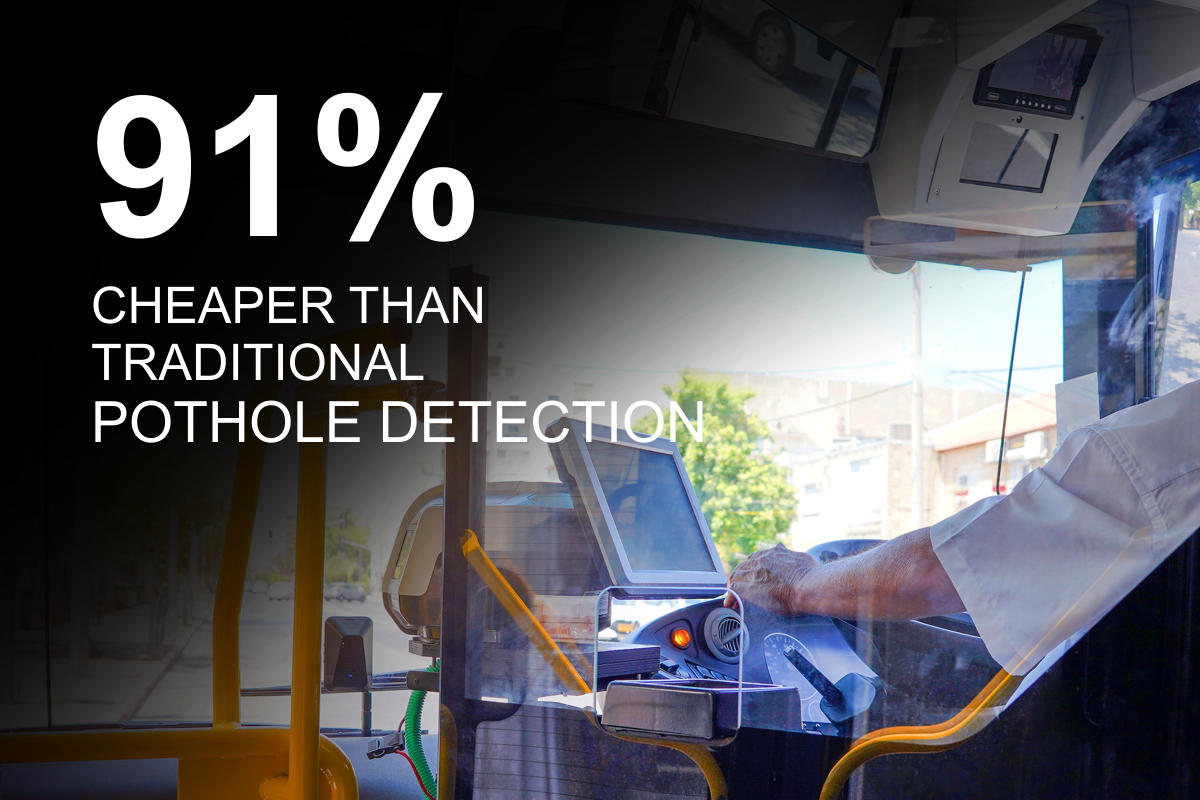
By reducing reliance on urgent callouts and improving planning, resources can be used more effectively. Forecast
modelling suggests potential savings of up to 91% compared to traditional inspection-led approaches.
How Pothole Detection works
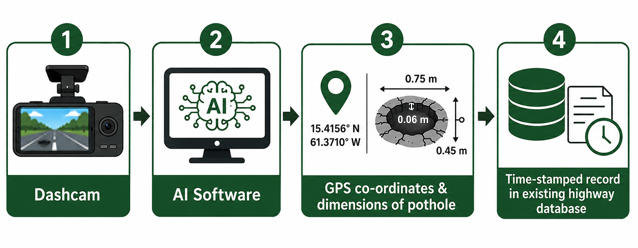
The system fits into existing workflows rather than replacing them:
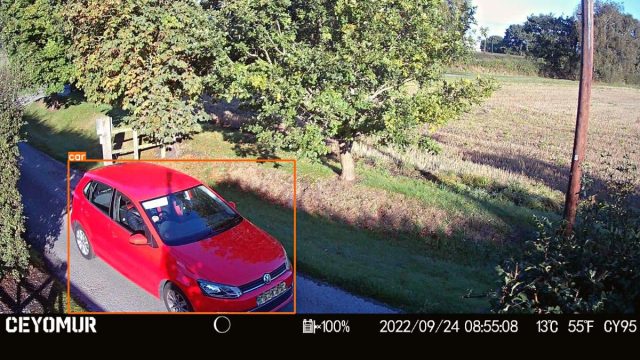
- AI software analyses video captured by existing vehicle-mounted dashcams using computer vision to identify potholes, calculate their dimensions and determine their GPS location.
- No requirement for new platforms
- Potholes are mapped and data feeds directly into current asset management systems
- Defects can be automatically converted into maintenance actions
Find out more
Contact Retail Sensing to discuss how the system can be tailored to your needs and budget — no obligation, just a friendly chat.